

As someone who’s been around sports and always wanted to be part of the industry, I used to think the only paths were playing or coaching. But the more I learned, the more I realized how many careers exist behind the scenes that actually keep sports going.
I’m writing this to better understand these careers myself, and to share what I’ve learned with others who might be on the same path.
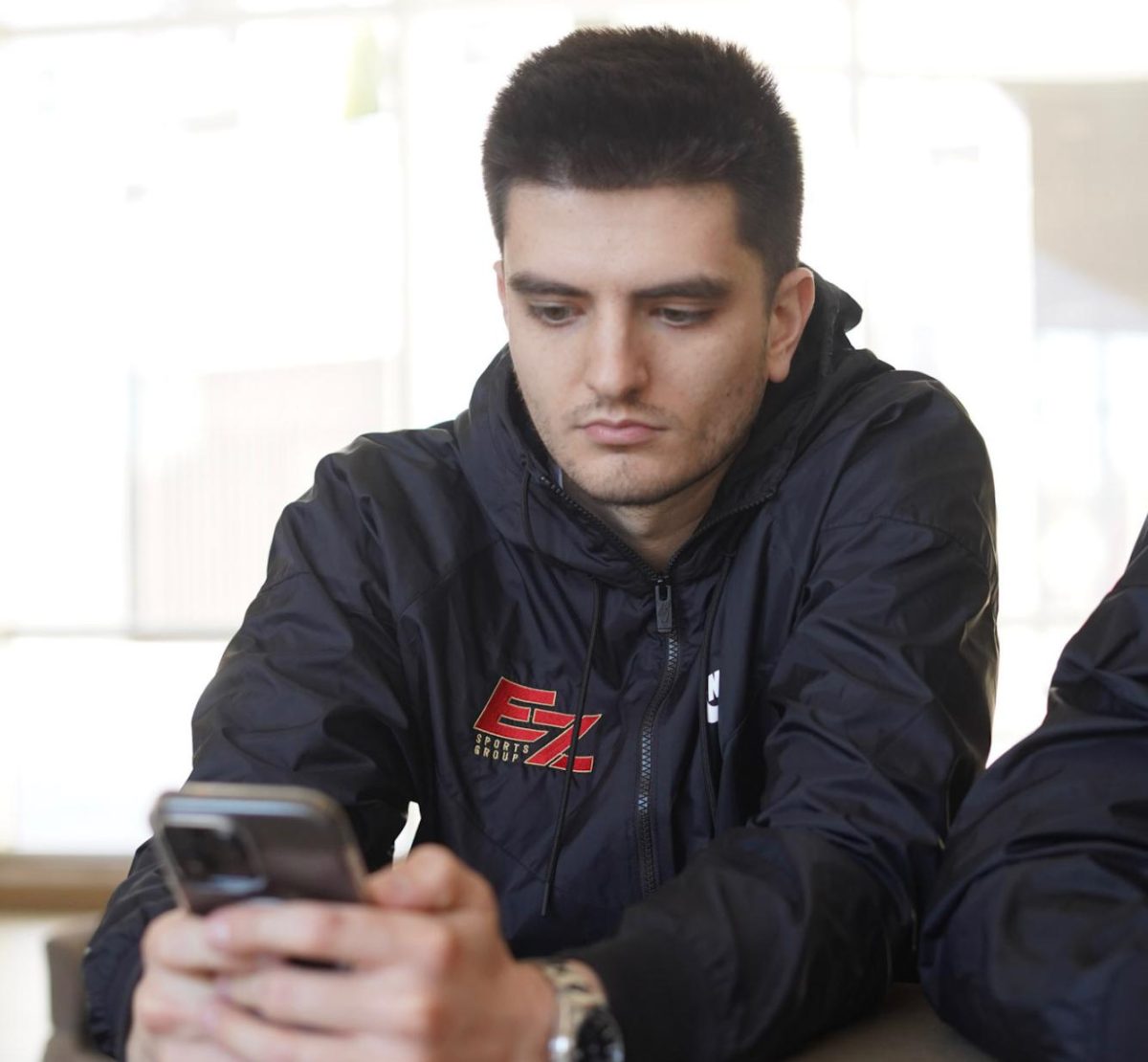
Ethan Coury – Agent – EZ Sports Group
Why did you choose to pursue a career involving sports? Why did you choose this path specifically?
I chose to pursue a career involving sports because I always had a love for basketball and other sports since I was a kid. Whether it was playing myself, going to games, or watching SportsCenter every morning before school, sports have always been a huge part of my life.
I chose this path specifically because I wanted to be involved on the business side of sports (specifically basketball), and help kids & families reach their goals.
⸻
What does an average day of work look like? What are some aspects of your job that some people may not consider when thinking about pursuing your career?
Overall, every day looks different for me depending on the time of year.
I am constantly on the phone connecting & networking with other people no matter what is going on. Whether it is helping our current clients with their individual situations, communicating with coaches & parents, or recruiting potential clients to sign with our agency, I am on my phone for an average of 15 hours a day most of the time.
Something that I don’t think a lot of people consider when thinking about pursuing a career as a sports agent is the amount of time that is sacrificed to pursue this career at a serious level. I have had to sacrifice a ton of time away from friends and family in order to build connections and help put myself in my clients in the best situation possible.
⸻
What are some steps you took early on to break into the industry?
Some steps that I took early on while breaking into the industry included reaching out to different people such as players & coaches in order to attempt & start to build my network in this space.
Another big step was when I took my FIBA-License Agent Exam to become licensed to represent professionals overseas.
⸻
What is the best part about your job? The most difficult?
The best part of my job is getting to build connections & relationships with different individuals that all come from different backgrounds and walks of life. Some of the closest people in my life are from the relationships I’ve built in this business.
The most difficult part of my job is the pressure of making sure my clients are in the best possible position on and off the court to succeed at the highest level.
I enjoy the pressure that comes with the job although it can be very stressful (like anything else in life) at times.
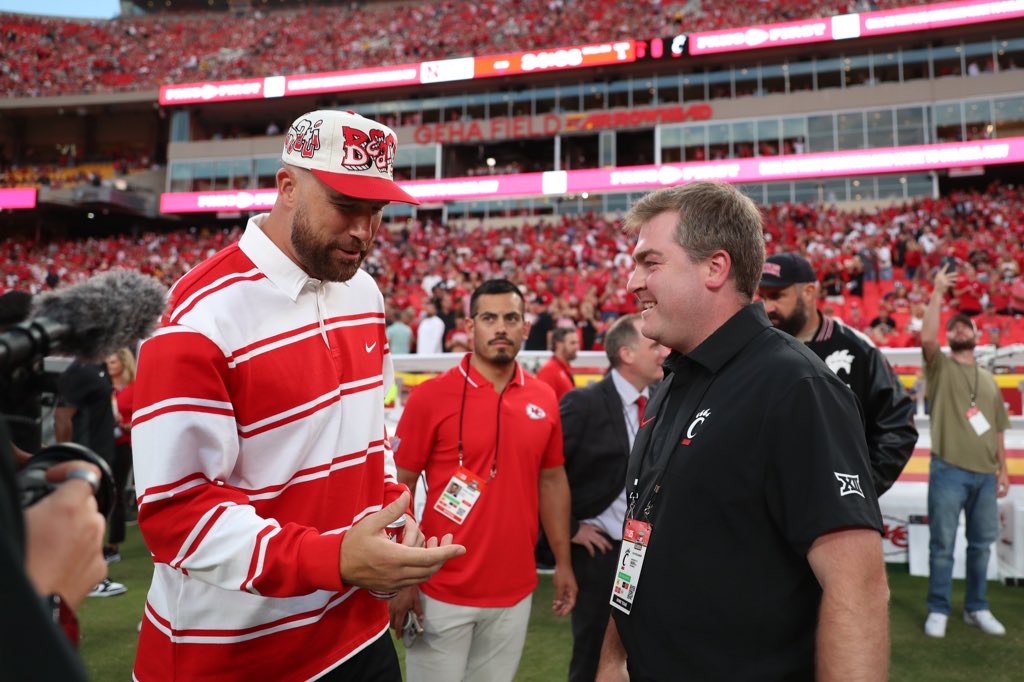
Clay Bollinger – Director of Content Strategy – University of Cincinnati
Why did you choose to pursue a career involving sports? Why did you pick this path specifically?
There’s nothing better than being a part of a team. I knew from an early point that I probably wasn’t going to have a chance to be on the field and competing thanks to my genetics, so where else could I create an opportunity to stay involved in sports as I went off to college?
Attending the University of Kentucky, I cold emailed the entire football staff to find a chance to be involved with the program and was given the chance to start in the equipment room as a student manager. I thought maybe I wanted to get into coaching, but really I just wanted to find a way to help the program in any way.
As college athletics shifts now more than ever, there was originally an arms race about a decade ago to increase creative promotion of your school and team.
I’d like to think I was on the cutting edge of that, creating WSTX Sports at St. X and making content for my classmates as Tigers.
I took that passion of shooting and editing videos and photos to the Kentucky coaching staff and said hey I can help do this for recruiting and our social media accounts here at UK. Thus, a lane was created that hadn’t existed for the Wildcats and was in the early stages of being formed across college athletics.
⸻
What does an average day of work look like? Are there any aspects of your job that people may not consider when thinking about pursuing your career?
Every single day is different, which is part of what I enjoy. Some days are planning — mapping out content, thinking through strategy, meeting with coaches and staff. Other days are execution — shooting at practice, editing, posting, reacting in real time.
What people probably don’t realize is how much of the job is coordination and decision-making. You’re balancing coaches, players, recruiting needs, fans, administration, and timing across multiple platforms. And you’re doing it fast.
There’s also a lot of responsibility that comes with representing a program publicly — every post matters, especially in college athletics where recruits are watching everything.
It’s creative, but it’s also operational. You have to be organized, consistent, and able to make quick decisions under pressure.
⸻
How do you decide what content will perform well?
A lot of it comes down to understanding people more than understanding algorithms. If something makes someone feel something they’re more likely to share it.
We think a lot about who we’re talking to. For us, that’s recruits, current players, and fans. So the question becomes: would this make a recruit want to be here? Would a player feel proud to share it? Would a fan send it to someone else?
There’s definitely strategy behind it — timing, format, trends — but the foundation is always the story. If the story is strong, the content usually follows.
⸻
What is your favorite post you have worked on?
Thinking back through the tens of thousands of posts I’ve hit send on over the last 13 years, I think one of my favorite projects was during my time at West Virginia when we unveiled the new Cue Country Roads uniforms for the first time.
Getting a chance to lead the athletics creative unit as a whole was a special opportunity there in Morgantown. The state means so much to them, that telling the story of how the uniforms were made to reflect the people of West Virginia was a really cool piece of content.
We also happened to go viral on TikTok for trying to keep the uniform model hidden on the busiest road in town to shoot the reveal. That may have been more fun than the produced cinematic video.
Grant Wright – Corporate Partnerships Activation Manager – Oklahoma City Thunder
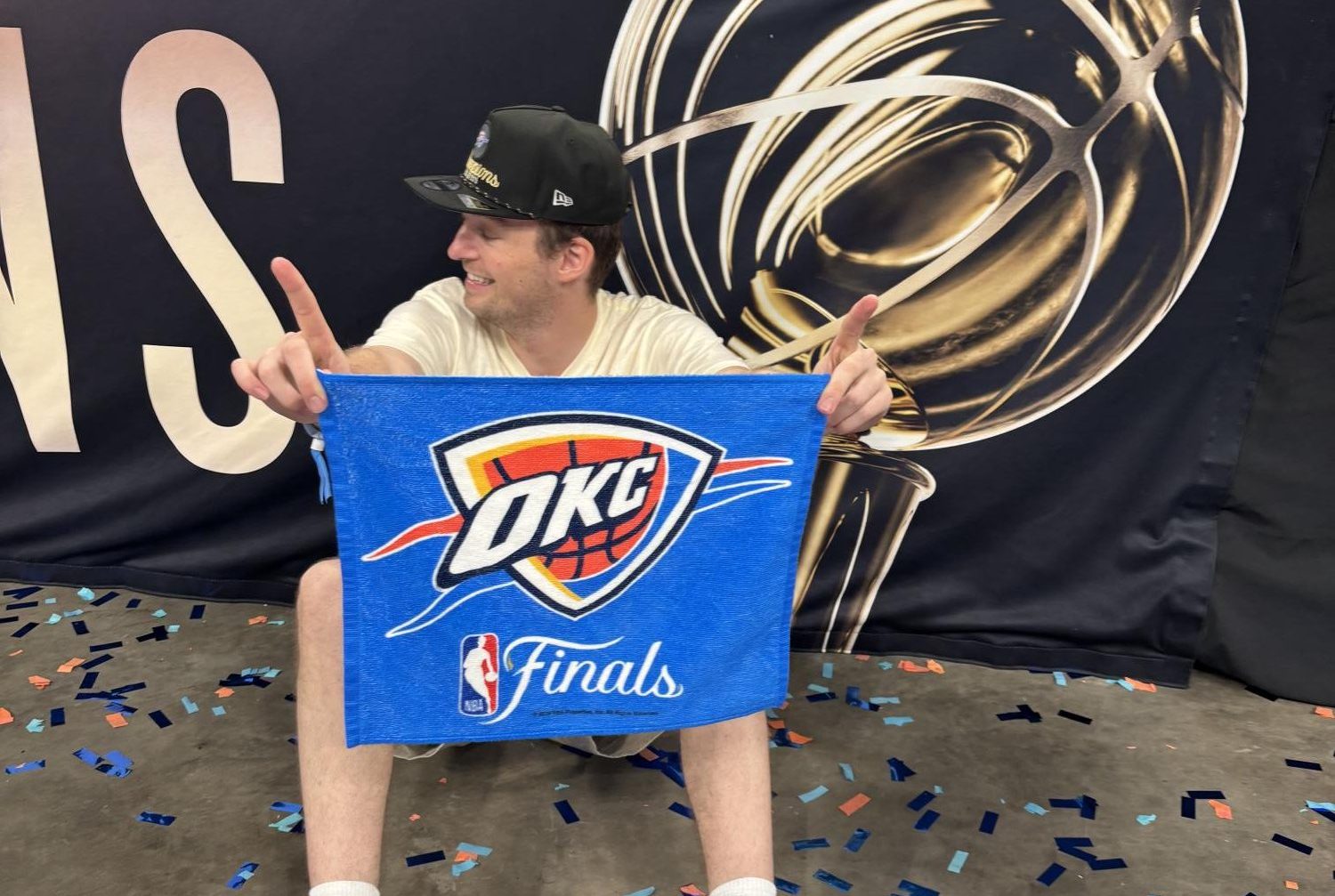
Why did you choose to pursue a career involving sports?
Ever since I was young, I knew I wanted to work in sports. I didn’t have a clear picture of the exact role, but I knew I wanted to be around it.
I’ve always loved the energy of games, the way fans connect with each other, and how teams can bring people together and make a real impact in the community. That environment always felt meaningful to me.
At the same time, I never really saw myself in a traditional desk job. I wanted something more dynamic, something where every day could look a little different. Sports naturally checked all of those boxes, so it was something I kept working toward.
⸻
Why did you choose this path specifically?
To be honest, this path came together over time.
Toward the end of college, I applied to a wide range of roles and ended up with three internship opportunities: ticket sales with Louisville City FC, a game day role with a minor league hockey team in Florida, and a corporate partnerships internship with the Louisville Bats.
The partnerships role stood out because it offered exposure to a lot of different areas of the business. At the time, I wasn’t fully set on partnerships long-term. I just wanted to get experience and learn.
Once I got into it, things clicked pretty quickly. Within four months, I moved into a full-time role with the Bats. About six months later, I joined the Oklahoma City Thunder in November 2022.
Looking back, I’m really glad it worked out the way it did. I didn’t map it out perfectly, but I stayed open, took the opportunity in front of me, and it led me to something I genuinely enjoy.
⸻
What does an average day at your job look like? What are some aspects people may not consider?
There really isn’t an average day, which is part of what makes the role interesting.
At a high level, our partnerships group has three areas: sales, strategy, and activation. I’m on the activation side. Our job is to take what was sold and actually bring it to life.
That means you’re balancing two responsibilities at the same time. You’re representing the team, but you’re also advocating for the partner. If the partner doesn’t feel value, they won’t come back, so it’s on us to make sure everything we promised is executed the right way.
Because of that, we work across almost every department. On any given day, I’m coordinating with marketing, social, broadcast, content, ticketing, community, legal, IT, guest relations, and more. My role is to keep everything aligned so our partners’ assets actually happen the way they’re supposed to.
On non-game days, I’m usually splitting time between desk work, internal meetings, and client meetings. Those client conversations are typically focused on how their partnership is performing and where we can improve or expand.
Game days are completely different. It’s a lot of movement. I’m checking in with different departments, making sure activations are running correctly, spending time with clients, and troubleshooting anything that comes up. You might find me courtside, in a suite, in the tunnel, or in the control room depending on what’s needed.
One thing people don’t always realize is the time commitment. There really isn’t a true off-season for partnerships. During the season, it can be 50 to 55 hours a week on average. In the off-season, the focus shifts to renewals and new business, so while the hours might be slightly lower, the workload is still very demanding.
The other piece is compensation early on. It’s competitive to get into sports, and because of that, entry-level pay is usually lower than people expect. A lot of people use sports as a foundation to eventually move into brand-side roles where compensation can increase.
⸻
What advice would you give someone who wants to get into sports marketing?
Start building your network early and be intentional about it.
Use LinkedIn, reach out to people working for teams or brands you’re interested in, and ask for a short conversation. Afterward, follow up with a thank-you note. Staying consistent with that matters more than people think.
At the same time, get as much hands-on experience as you can. That can start in high school or college. Working with an athletic department, being a team manager, or helping behind the scenes all adds up.
If you’re in college and don’t have experience yet, be proactive. Reach out to coaches or athletic staff and ask how you can help. A lot of those opportunities won’t be handed to you. You have to go find them.
The biggest separator is initiative. A lot of people say they’re willing to go above and beyond, but fewer actually do it. If you can show that consistently, you put yourself in a much better position.
Once you get your foot in the door, be curious, stay late when needed, and try to anticipate what’s coming next. If you can become someone people rely on, that goes a long way in this industry.
⸻
What is your favorite partnership you’ve worked on?
The ones that stand out most are the community-based programs.
Things like the American Fidelity Reading Timeout and Book Bus, or the OG&E community court dedications and safety partner awards. Those programs go beyond just visibility. They create real impact.
What I enjoy about them is that they touch everything. You’re working with multiple internal teams, coordinating events, helping tell the story through content, and seeing the direct effect in the community.
There’s also a personal growth side to it. You’re often in high-pressure environments, speaking on camera, or involved in important partner conversations. Being in those situations consistently helps you get more comfortable and more prepared for bigger moments down the line.
Overall, those partnerships feel the most complete. They deliver for the partner, they support the organization, and they make a difference in the community at the same time.