


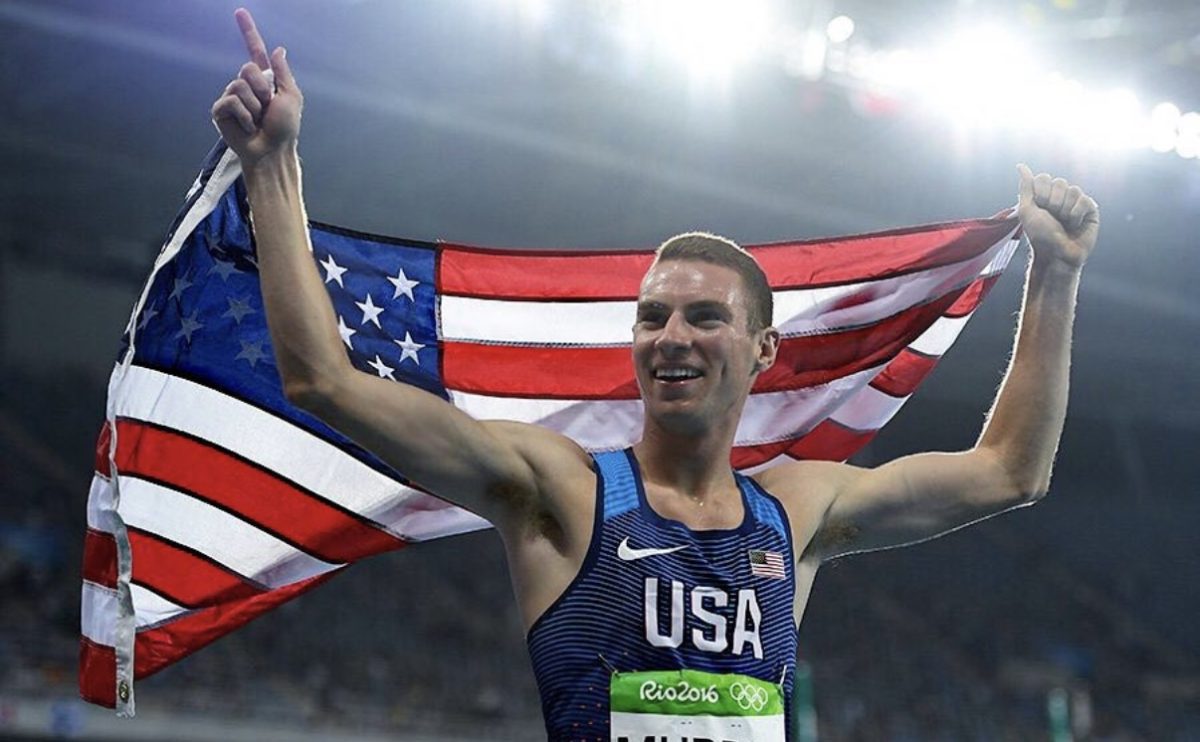
Clayton Murphy is the perfect example of how the end of an athletic career is not the end of your life, but the opportunity to grow.
Clayton’s journey is one built on passion and persistence, beginning in a small-town environment where running started as something simple; just a group of friends looking for something to do together. What began as a casual decision to join cross country quickly blossomed into something much more serious. As Murphy’s talent and work ethic pushed him from local meets to the global stage. By his sophomore year of college, he realized that competing at the Olympic level wasn’t just a dream, but a realistic goal. That belief carried him all the way to the 2016 Olympics, where he earned a bronze medal and experienced the overwhelming emotions that come with it.
However Murphy’s story doesn’t stop at the track. Driven by the same competitive mindset that fueled his athletic career. He has successfully transitioned into the world of sports cards and entrepreneurship with the creation of Medalist Breaks. During covid, he started streaming, collecting, and building a community which evolved into a full scale business. Murphy has built a loyal community within the market of Formula One sports cards.
His journey reflects not only the pursuit of excellence in sport, but also the ability to adapt, evolve, and find new ways to compete and succeed.
Who started your love for running?
I started my love for running through friends early on in elementary school and into middle school. A group of us decided to run cross country for fun after one of our friend’s older brothers told us how much he enjoyed it. Growing up in a really small town and school, it was very much word of mouth that got us involved. It became something we could all do together, and that’s really how it all started.
When did you know you could run at an Olympic level?
I really realized I could run at an Olympic level during my sophomore year of college, which was just about a year before I made the Olympic team. My freshman year was focused on breaking four minutes in the mile and adjusting to a higher level of competition, new environments, and a new system. Then in 2015, everything started to click—that’s when I truly saw the Olympic dream as a real possibility. That same year, I also qualified for the World Championships.
How did it feel when you stepped up on the podium?
Stepping on the podium was an incredible feeling. It was a mix of excitement, nerves, and a deep sense of accomplishment. More than anything, I felt overwhelming gratitude—for all the work that went into it and for everyone who supported me along the way. It didn’t feel like I was standing there alone; it felt like my entire team was up there with me. It was truly a shared achievement.
I’ve read about how you met your wife at the 2016 Olympics. What was that like?
We actually met in the Olympic Village playing Uno in the lounge. We stayed friends for a while, then eventually started talking more, which turned into a relationship—boyfriend and girlfriend, then fiancé, and now husband and wife. To this day, there’s still a debate about who actually won that Uno game.
After medaling in 2016, what pushed you to compete again at the Tokyo Games?
Honestly, it was my own competitive drive. I always joked that it was “just bronze,” and I wanted to go back for gold. It was about continuing to push myself, to improve, and to become the best version of myself both as an athlete and as a competitor.
Why did you start Medalist Breaks?
I started Medalist Breaks during COVID. At the time, I was streaming on Twitch—doing gaming, interviews, and podcasts within the running community—and wanted to create another income stream. I got back into coins and currency, which eventually led me back into sports cards. I started working at a local shop, helped build their Whatnot channel to around 10,000 followers, and began breaking there. Then, the day my son was born, I decided to go out on my own. That’s when Medalist Sports Cards—now Medalist Breaks—was launched, and it’s grown into what it is today.
F1 sports cards are fairly new… Why specialize in them?
I really leaned into the F1 space during the 2022 Chrome release. I had broken 2021 Chrome while working at a local shop and absolutely loved it—the sport, the cards, everything just clicked. Then in 2022, I had the opportunity to do it on my own as I was starting Medalist Breaks, and that’s when it really took off for me. What stood out was the community. Even within what is already a niche hobby, F1 has its own tight-knit, passionate group of collectors. We’ve branched out into other areas like soccer, NASCAR, and even some entertainment products like Disney, but we’ve always come back to F1. It’s where our passion is, and where we feel we can give our full energy and focus.
When did you realize this “hobby” could become a profession?
I realized pretty quickly while working at the shop that this was something I could potentially do on my own. At first, I got into it to fuel my own passion for ripping boxes and being involved in the hobby. But over time, I started to see that there was a real opportunity. I recognized that breaking wasn’t just about the cards—it was about the experience. I had a natural feel for the live aspect, building energy in a room, and creating entertainment around it. That’s when it clicked that I could build something bigger—not just a side hustle, but a real business centered around community and engagement.
Does the business side of cards ever take away from your love for them?
I’d say yes and no. In some ways, it does—especially when it comes to my own personal collection, where I tend to look at purchases more from a business perspective. But my passion for the hobby has really shifted rather than disappeared. I get a lot of fulfillment from helping others build their collections, chase their grails, and grow within the hobby. I take a lot of pride in what we’ve built with Medalist Breaks and the role we play in that process. In many ways, I now live that passion through the community.