


For senior Hunter Earls, learning never stopped in the classroom. While many students use artificial intelligence (AI) through chatbots, Earls has focused on understanding what comes next and how to build it.
A student at St. X, Earls started programming years ago for his love of the game. Over time, that passion turned into building platforms that apply AI in multiple ways.
“I’ve always been interested in how things work,” Earls said. “Once you realize you can build these tools yourself, it changes how you think about learning.”
One of his early projects, Pastchat.AI, allowed users to interact with historical figures using A.I. If someone wanted to “talk” to someone like Aristotle or Abraham Lincoln, they could. The project brought together programming, history, and philosophy, showing his interest in combining different subjects instead of focusing on just one.
“I liked the idea of learning by interacting,” he said. “If I was reading philosophy, why not try to talk to Aristotle instead of just reading about him?”
This mindset of learning by building has shaped much of Earls’ work and set the foundation for what he is doing today.
Recently, Earls has been working with an upcoming area of technology commonly known as A.I agents. Unlike traditional AI tools that only respond to prompts, AI agents can take action opening programs, navigating websites, and completing tasks on their own.
“AI agents don’t just give you answers,” Earls explained. “They actually do things for you.”
These systems can analyze results and decide what to do next without step-by-step instructions. Earls has experimented with agents that manage calendars, navigate platforms, and even communicate with other agents.
For example, you could ask your AI agent to find a YouTube video and it would literally go and open the chrome, type in YouTube, find the video, and start playing it.
“Once an agent learns how to solve a problem, that knowledge can be shared,” he said. “That’s where things get powerful.”
He has collaborated with other young developers he met through national tech events to build systems where multiple agents work together. While the technology is still developing, many believe it could change how people work in the future.
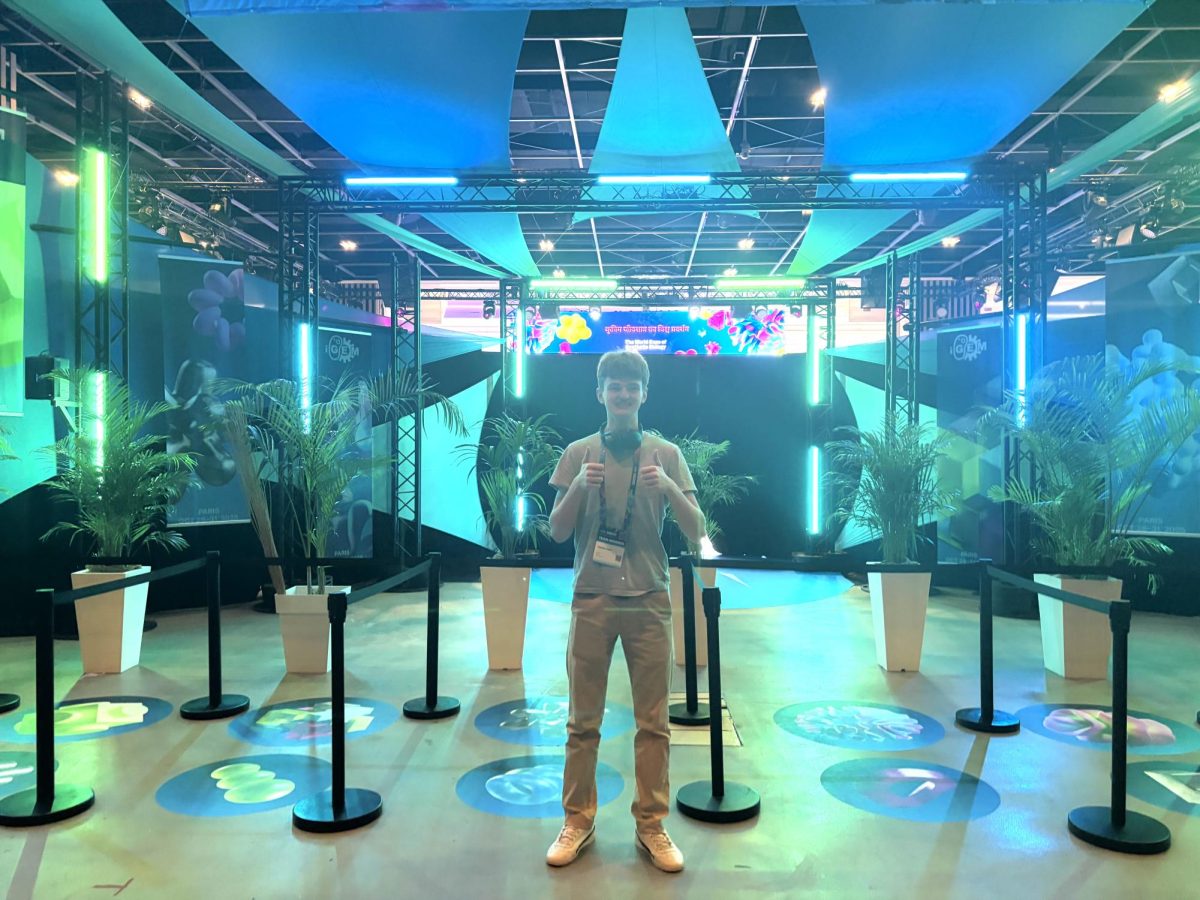
In addition to AI, Earls has contributed to scientific research through iGEM, an international program focused on solving real-world problems using synthetic biology.

As one of only two Saint Xavier students selected, he worked on a project addressing PFAS, often called “forever chemicals,” which contaminate water and are difficult to detect outside of labs.
“The goal was to create a way to identify PFAS on-site instead of sending samples to expensive labs,” Earls said.
The team earned a gold medal at the iGEM Jamboree and presented their research in Paris alongside teams from around the world.
“Whether it’s AI or science, the coolest part is working on problems where there isn’t already a clear answer,” Earls said.
Through curiosity, initiative, and a willingness to explore beyond the classroom, Earls shows how students can take learning further both at Saint Xavier and beyond.