


Artificial intelligence has quickly become one of the most talked-about tools in education — especially when it is used ethically by students and teachers at St. X.
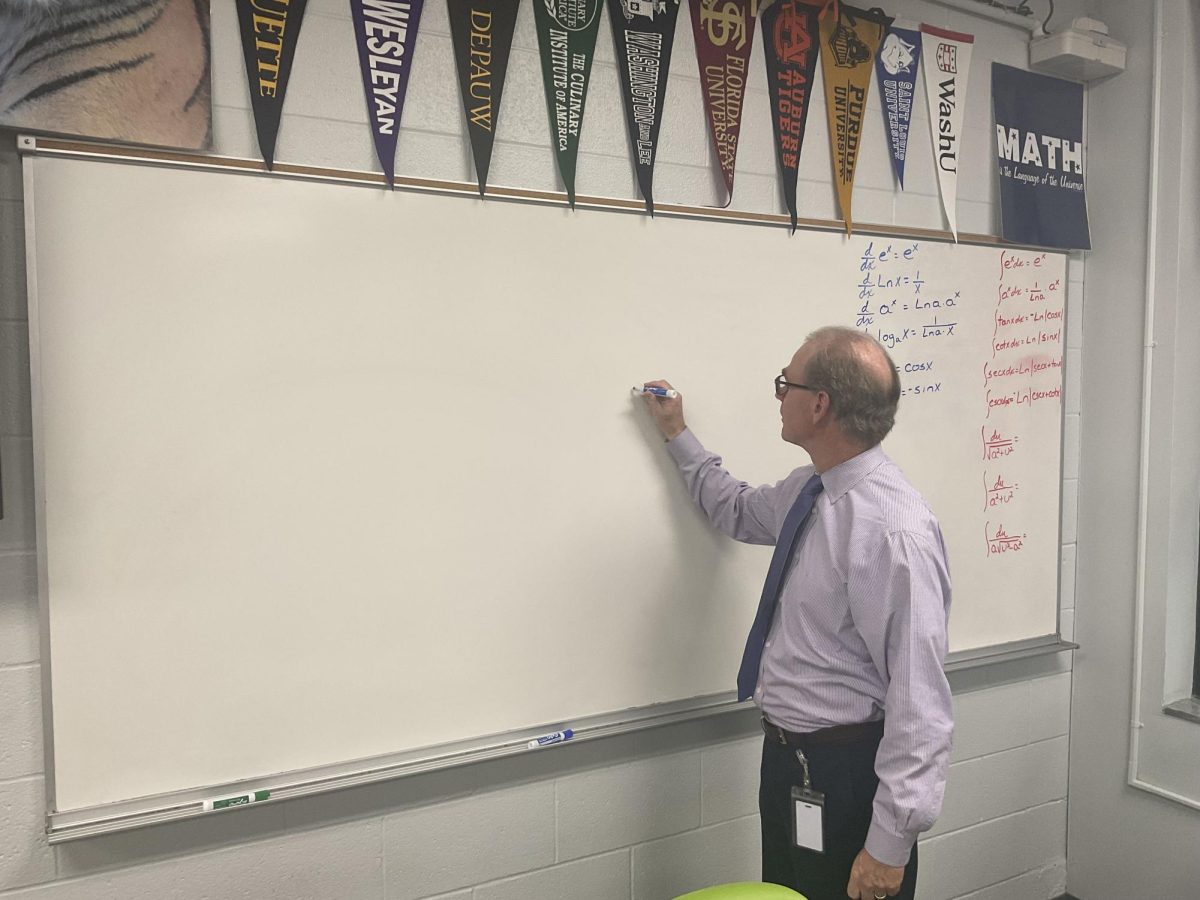
Coach Jefferson, a math teacher at St. X, says that AI can be used both for good and bad. In math, using A.I. can make it hard to ensure you are using it in an ethical way and not just cheating.
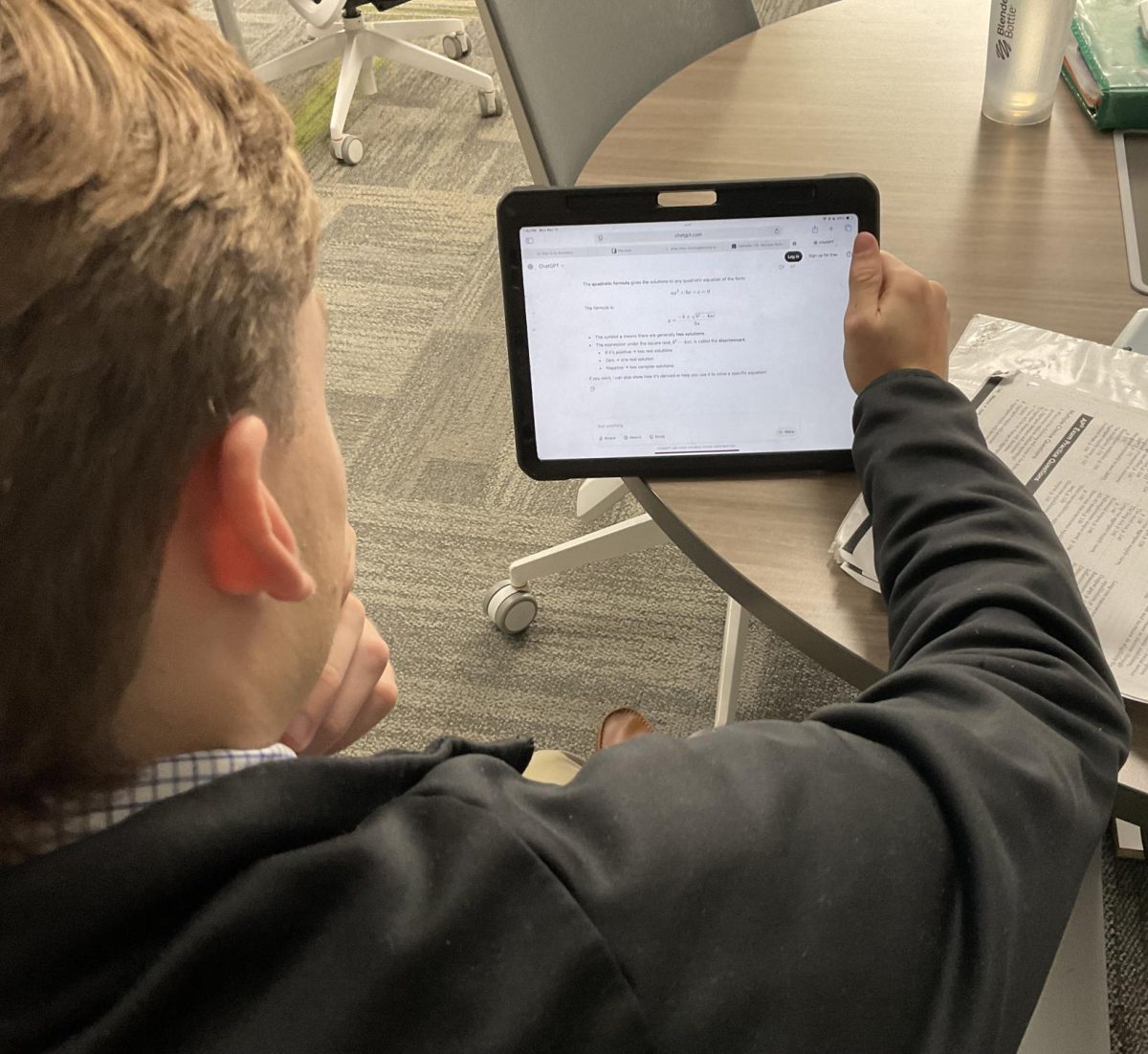
“For years math books have always had the answers to odd-numbered problems in the back of the book,” Coach J said. “I see AI as an enhanced version of this. Not only can students check their work, but they can actually see how the entire problem is worked out. I see this as very beneficial.”
He also sees a couple of problems with using AI and warns against misuse.
“The caveat is: are students using it in the correct, most useful way, or are they just plugging their homework into AI and then copying it down?” Coach J said. “That is both dishonest and not beneficial to their learning in any way. As the big poster in the back of my room says: ‘Math is not a Spectator Sport.’ You cannot learn math by watching AI do the problem for you. But if you work out the problem to the best of your ability and then use AI to check your work process and solution, then AI is a valuable assistant to both the student and the teacher.”
He believes that AI can be useful and help students learn to the best of their abilities, but if used incorrectly, it will not help them — instead, it will harm them by only giving the answer and not teaching them how to use it.
For St. X students, AI has become a useful tool for studying, writing, and even organizing activities. Dash Coyle, a senior, uses A.I. to help him study more effectively.
“I use it a lot for studying tools,” Dash said. “You can use it to create Quizlets and other study guides for specific topics in your class. I also use it to grade essays that I’ve written so I can see my possible improvements.”
Sam Jurgensen, the senior class president at St. X, uses AI both inside and outside the classroom.
“I use AI a lot as a tool outside of the classroom to learn,” Sam said. “Things like looking up the history of places or things. One example I have was yesterday after we pulled out our Wave Runner — I asked ChatGPT the proper steps to clean and winterize it, and it gave me a list of things to do. I have also used it sometimes for planning SAC meetings and asking for ideas like some ideas for the pep rally and promos.”
Another senior at St. X, Ethan Bell, said something very similar to Dash about how he uses A.I. to help him during school.
“I use AI to help me check for any grammar mistakes and how to fix them without changing my words,” Ethan said.
George Jageman, a senior, uses AI a lot in school and out of school. He uses it during school like many others on this list and to help him with things outside of school too.
“I use AI for research across different subjects.” Jageman said. “I’ve used it to compile tuition costs with scholarships to compare what my cost of attendance will be for college. I have also used it to compare different majors to help me decide on a major and what pathway I want to go down in college.”
Mrs. Vessels emphasizes that the key to ethical AI use is balance. She says that we should use it to help support learning, not replace teaching and education. She also believes that educators should help students learn to use it ethically.
“As the workforce shifts to AI, we have a responsibility to teach students how to use it responsibly and ethically,” Mrs. Vessels said. “AI can support and reinforce learning — but it should never replace the thinking or the learning itself.”
In her class, she allows students to use AI as a tool for creativity, research, and reflection. She says it helps students brainstorm when stuck, research faster while checking sources, tutor or reteach when needed, give written feedback, and make sense of data. She recently had one of her classes use AI on a project.
“We used AI for a recent podcast project — students did all the research themselves first, then used Perplexity and Microsoft Copilot to help shape the script,” Mrs. Vessels said. “The final product was still theirs — their thinking, their voice, their learning. AI simply helped them work smarter, not lazier.”
Across St. X, teachers and students agree that AI isn’t a shortcut but a useful tool if used ethically. It helps students be prepared for a future where AI, technology, and creativity go hand in hand and can benefit society.